
Choosing the right ankle brace after an ankle sprain or chronic ankle instability can make a significant difference in your recovery and long-term ankle health. As a foot and ankle surgeon in Orange County, I have helped thousands of patients find the right brace for their specific injury and activity level. This guide will help you understand the three main types of ankle braces — soft sleeves, rigid stirrup braces, and hybrid braces — so you can make an informed decision.
How to Choose the Right Ankle Brace
Ankle braces speed up recovery from ankle sprains and help prevent future injuries. The type of brace you need depends on the stage of your recovery, the severity of your injury, and how active you plan to be. Here is a quick overview:
- Right after injury: A rigid stirrup brace provides the most stability and inversion control.
- Several weeks into recovery: A soft or hybrid brace gives comfortable support while you rebuild strength.
- Long-term prevention: A lightweight compression sleeve or hybrid brace helps reduce re-injury risk during activity.
The best way to prevent an ankle sprain is to combine bracing with physical therapy. Peroneal tendon strengthening exercises using an exercise band are strongly recommended. You can find ankle strengthening videos here.
Important note: Wearing a rigid ankle brace for more than a few months can cause ankle weakness, as your muscles begin to rely on the brace instead of doing the work themselves. Always pair brace use with rehabilitation exercises.
Featured Ankle Brace Recommendations
Below are the ankle braces I most commonly recommend to my patients, available on Amazon with fast delivery.

Active Ankle T2 Ankle Brace
Rigid Stirrup Brace for Protection & Sprain Support

Sleeve Stars Ankle Brace
Compression Support for Plantar Fasciitis & Ankle Pain

PediFix Ankle Bandage
Lightweight Elastic Compression Bandage

Aircast Air-Stirrup
Universal Rigid Ankle Support Brace
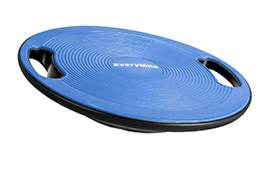
Balance Stability Trainer
Portable Balance Board for Ankle Rehabilitation
Type 1: Soft Ankle Sleeves & Compression Braces
Soft ankle sleeves are lightweight, flexible braces that provide gentle compression and proprioceptive feedback — meaning they help your body become more aware of ankle position, reducing the risk of rolling. They are best used during the later stages of recovery or for mild, chronic ankle instability.
When to use a soft ankle sleeve:
- In the weeks following an initial acute injury, once swelling has decreased
- For daily wear during work or low-impact activity
- As a long-term brace for patients with mild chronic ankle instability
- To control edema (swelling) after exercise
Soft sleeves are much easier to fit inside a shoe and are far less bulky than rigid braces. Because they are soft, they allow a more natural range of motion. However, they do not provide significant inversion control on their own — always pair them with strengthening exercises for best results.

Soft Ankle Sleeve
Lightweight Daily Wear Compression Sleeve
Sleeve Stars Ankle Support
Soft Compression Wrap for Plantar Fasciitis & Ankle Pain
PediFix Compression Sleeve
Graduated Compression to Reduce Swelling

Elastic Bandage (ACE Wrap)
Versatile Compression Wrap for Swelling Control

Tech Ware Pro Compression Sleeve
Thin Sleeve with Firm Compression for Active Use

Sleeve Stars Ankle Support
Includes Bonus Compression Strap for Added Support

Ankle Compression Sleeve
Reduces Swelling & Improves Circulation
Type 2: Rigid Stirrup Ankle Braces
Rigid stirrup braces are the most protective type of ankle brace and are the first choice immediately after an acute ankle sprain. They feature semi-rigid plastic shells on either side of the ankle that prevent dangerous inversion (rolling inward) while still allowing your foot to move naturally up and down. This means you can walk, run, and play sports with confidence during the early healing stages.
When to use a rigid stirrup brace:
- Immediately after a Grade I, II, or III ankle sprain
- During post-operative rehabilitation following ankle surgery
- For patients with chronic ankle instability who participate in high-impact sports
- When maximum inversion protection is needed
Keep in mind that you may need to wear a half size larger shoe to fit a rigid brace comfortably. Do not wear a rigid brace for longer than a few months without re-evaluating with your doctor, as prolonged use can weaken the surrounding ankle muscles.
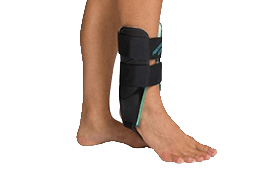
Rigid Stirrup Ankle Brace
Best for Acute Injuries & Maximum Inversion Protection
Aircast Air-Stirrup
Pre-Inflated Air Cells for Compression & Stability

Active Ankle T2 Brace
Feather-Light Rigid Brace for Sports & High Activity

Active Ankle T2 – Easy Fit Design
Quick Single-Strap Fit for Low-Top & High-Top Shoes
Type 3: Hybrid Ankle Braces
Hybrid ankle braces combine elements of both soft sleeves and rigid supports. They typically feature a lace-up or strap-based design with semi-rigid side panels. Hybrid braces offer more control and inversion protection than a plain soft sleeve, while remaining more comfortable and flexible than a full rigid stirrup brace.
Who benefits most from hybrid ankle braces:
- Athletes who are at high risk of ankle sprains but need to stay active in high-energy sports
- Patients transitioning out of a rigid brace during mid-stage recovery
- Anyone with chronic ankle instability who needs more than a soft sleeve but wants better comfort than a hard brace

Hybrid Ankle Support Brace
Strap & Lace Design for Active Patients

Athletica Ankle Brace
Reinforced Side Stabilizers for Lateral Motion Control

ASO Ankle Stabilizer
Figure-Eight Straps for Firm, Low-Profile Support

Trilok Ankle Brace
FootLok Strap for Arch Support & Lateral Stability

Zenith Ankle Brace
Fully Adjustable Lace-Up Brace for Any Sport
Ankle Strengthening & Rehabilitation Tools
A brace is only one part of ankle rehabilitation. The most effective long-term strategy combines bracing with targeted strengthening exercises. These tools are widely used in physical therapy and can be used at home to rebuild ankle strength, improve balance, and reduce the risk of re-injury.
An exercise balance board is particularly effective — it improves proprioception, increases range of motion, strengthens the entire lower kinetic chain, and is appropriate for both physical therapy and active sports training.

Theraband Resistance Band
For Peroneal Tendon & Ankle Strengthening Exercises

Ankle Exercise Balance Board
Builds Stability, Balance & Ankle Strength
All of the ankle braces and rehabilitation products above are available online on Amazon. If you are unsure which brace is right for your specific condition, please contact our office or watch the video guide above for a detailed walkthrough from a board-certified foot and ankle surgeon.
Last Updated June 2026 – OC Podiatry, Orange County, CA