
Septic Arthritis in the Big Toe Joint: Surgical Treatment and Skin Grafts to Save the Toe
Septic arthritis in the big toe joint is a serious condition that requires prompt medical attention to avoid permanent damage to the joint and surrounding tissues. This infection, often caused by bacteria, leads to painful swelling, pus buildup, and can even threaten the survival of the affected toe. If left untreated, septic arthritis can result in the loss of mobility and even the loss of the toe itself. In this post, we’ll discuss the signs, symptoms, and surgical treatment options for septic arthritis in the big toe, including the critical role of skin grafts in healing.
What is Septic Arthritis?
Septic arthritis is an infection within the joint that causes severe pain, swelling, and redness. In the case of the big toe, this can affect your ability to walk or even wear shoes comfortably. The infection typically results from bacteria entering the joint through an open wound or bloodstream. The infection can cause pus to accumulate inside the joint, leading to further damage if not treated in time.
Causes and Risk Factors
Septic arthritis of the big toe joint usually develops when bacteria enter the joint space. This can happen through a puncture wound, an infected ingrown toenail, a diabetic foot ulcer, or an infection that spreads through the bloodstream from elsewhere in the body. People with diabetes, weakened immune systems, gout, rheumatoid arthritis, or a history of joint surgery face a higher risk of developing this infection. Because gout can cause similar redness and swelling in the same joint, it is sometimes mistaken for septic arthritis, which is why a prompt evaluation by a foot and ankle specialist is so important.
Common Symptoms to Watch For
- Sudden, severe pain in the big toe joint
- Significant swelling, redness, and warmth around the joint
- Difficulty putting weight on the foot or wearing shoes
- Fever or chills
- Pus or fluid draining from the joint or a nearby wound
- Symptoms that worsen quickly over a day or two
If you notice these symptoms, especially with fever, seek care right away. Septic arthritis can damage a joint permanently within days if it isn’t treated.
How Is Septic Arthritis Diagnosed?
To confirm septic arthritis, your podiatrist will examine the toe and may recommend joint fluid aspiration to test for bacteria, blood tests to check for signs of infection, X-rays or an MRI to evaluate the bone and soft tissue, and cultures to identify the specific bacteria so the right antibiotic can be chosen. An accurate diagnosis helps your doctor decide quickly whether surgery is needed.
Surgical Treatment for Septic Arthritis of the Big Toe
In severe cases of septic arthritis in the big toe, surgery may be required to clean out the infection and prevent permanent joint damage. The procedure usually involves draining the pus and infected fluid from the joint, removing any damaged tissue, and thoroughly cleaning the area to ensure the infection is fully eradicated. In many cases, the joint may need to be partially or fully removed to prevent the infection from spreading.
The Role of Skin Grafts in Recovery
After surgery to treat septic arthritis, the affected area may require further attention for optimal healing. Skin grafts are often used to cover open wounds or areas where tissue has been removed. A skin graft involves taking healthy skin from another part of the body and transplanting it to the area where the infection and tissue removal occurred. This procedure promotes faster healing and helps prevent complications like infection or wound breakdown.
Skin grafts are an essential part of the recovery process for patients with septic arthritis of the big toe, as they aid in the restoration of skin integrity and improve the overall aesthetic appearance of the toe.
Recovery and Aftercare Tips
Recovery time varies depending on how advanced the infection was before treatment, but most patients follow a similar general path: regular bandage changes and wound checks in the first one to two weeks, a course of antibiotics (sometimes starting IV, then switching to oral) to fully clear the infection, protected weight-bearing or use of a walking boot while the graft site heals, and follow-up visits to monitor the skin graft and joint. As shown in the recovery photos below, many patients see significant healing within about four months, though full recovery time depends on the individual.
Why Choose Our Clinic?
If you’re suffering from septic arthritis in your big toe or another joint, seeking expert care is critical to ensuring the best possible outcome. Dr. Kolodenker specializes in treating complex foot and ankle conditions, using the latest surgical techniques to help patients recover quickly and return to their normal activities. We offer personalized treatment plans and closely monitor recovery to make sure your toe heals properly, even after the use of skin grafts.
Frequently Asked Questions
Is septic arthritis of the toe a medical emergency?
Yes. Because it can destroy joint cartilage and bone within days, septic arthritis should be treated as an urgent condition. Contact a foot and ankle specialist right away if you suspect it.
Can septic arthritis be treated without surgery?
Mild cases caught very early may sometimes be managed with antibiotics and joint aspiration alone, but many cases affecting the big toe joint require surgical drainage and cleaning to fully remove the infection.
Will I lose my toe?
Losing the toe is a risk in severe or delayed cases, but prompt surgical treatment and wound care, including skin grafts when needed, are aimed at saving the toe and preserving as much joint function as possible.
How long is recovery after surgery?
Recovery varies by patient, but many people see substantial healing within a few months, with continued improvement as the skin graft matures and the joint recovers.
Contact Us for a Consultation
If you’re dealing with septic arthritis or need help recovering from a foot or ankle infection, don’t hesitate to reach out to our office for a consultation. Our experienced team is here to guide you through the treatment process and provide the care you need to save your toe and restore your quality of life.
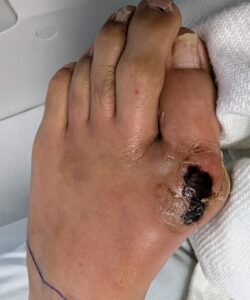
Initial Presentation of fluctuance and gangrene at the 1st MTPJ
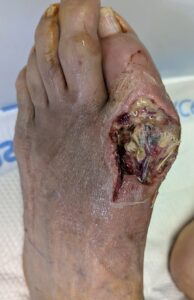
First bandage change about two days post op
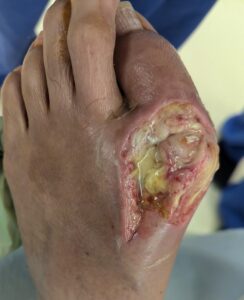
Five days post op with treatment of topical and IV antibiotics
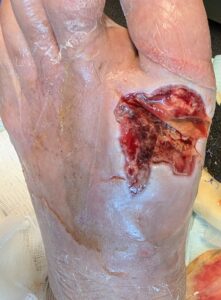
Bandage change one week after application of a graft
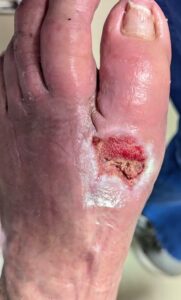
Using negative pressure therapy to speed up healing
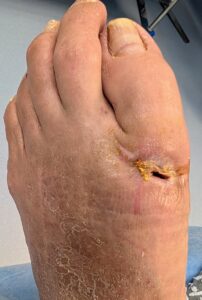
3 months post surgery
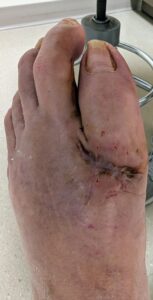
4 months post surgery, fully healed
Contact Dr. Kolodenker for a consult. Best way to reach the office is through text. 949-203-5704
You can also email Dr. Kolodenker at FootPain@gmail.com with wound care questions. Virtual Zoom consultations are available.
Be sure to request to see Dr. Kolodenker for your wound care needs.
We look forward to helping you.
Last Updated 07/04/2026